
SaaS SEO
A SaaS SEO agency for product-led growth — comparison pages, alternative pages, integration pages and the free-tier funnel. Free technical audit.

Product-led search is a different shape
SaaS SEO draws 260 searches a month in India at difficulty 36 — small numbers, which is what low-volume high-value demand looks like.
What separates SaaS from general B2B is that the product itself is the funnel. A visitor can sign up, try it and decide without speaking to anyone, which means the job of a page is often to get someone into a trial rather than into an enquiry form.
The five page types that carry SaaS pipeline
Comparison pages — 'X vs Y' — which are uncomfortable to write honestly and convert better than anything else.
Alternative pages — 'alternative to X' — capturing buyers already leaving a competitor.
Integration pages, one per tool you connect to. Each answers a query nobody else is answering, and each is genuinely different, which is what makes this legitimate at scale rather than doorway generation.
Use-case pages framed around the job rather than the feature.
A pricing page that actually states pricing. Hiding it loses the qualified buyers and keeps the unqualified ones.
The three page types that carry SaaS organic revenue
SaaS organic growth concentrates in a small number of page types, and most SaaS blogs are not among them.
Comparison and alternative pages. People evaluating software search competitor names, and they search them alongside the word 'vs' or 'alternatives'. These pages sit at the bottom of the funnel, convert at rates a blog post never approaches, and most companies avoid writing them out of discomfort about naming competitors. Written honestly — including where the competitor is the better fit — they are the most commercially valuable pages on a SaaS site.
Integration pages. One page per system you connect to, naming the system, explaining what the integration actually does and what it does not. They capture searches from people who have already bought the other product and are looking for what works with it, which is as qualified as intent gets.
Use-case and job-to-be-done pages. Not features, which describe the product, but the situation the buyer is in. The buyer does not search your feature names; they search the problem in their own vocabulary.
Underneath all three sits a structural question most SaaS sites get wrong: whether the blog, docs, changelog and marketing site live on one domain. Splitting them across subdomains divides the authority the content earns and is rarely worth the tidiness.
What to look for in a SaaS SEO agency
A SaaS SEO agency should talk about pipeline before traffic: which pages produce sign-ups and demo requests, and how those are attributed. It should know the difference between a comparison page and a blog post, and it should be comfortable reading your product analytics as well as Search Console.
If the first proposal is a content calendar of top-of-funnel articles, the agency is optimising for traffic it can report, not revenue you can bank.
The same work, a much larger market abroad
In India “saas seo” draws 260 searches a month at a difficulty of 36. Outside it the picture changes completely. “saas seo agency” draws 3,600 searches a month in the United States at a keyword difficulty of 8, with a cost per click of $27.80 — read in Semrush on 25 September 2026. Add the United Kingdom (1,600), Australia (590) and Canada (480) and the addressable term is roughly twenty times the Indian one.
A difficulty of 8 on a term advertisers pay $27.80 a click for is unusual, and it is worth being plain about why: this is a young market where most SaaS companies still buy SEO from generalists, so few agencies have built pages that answer the question properly. That is an opening, not a guarantee.
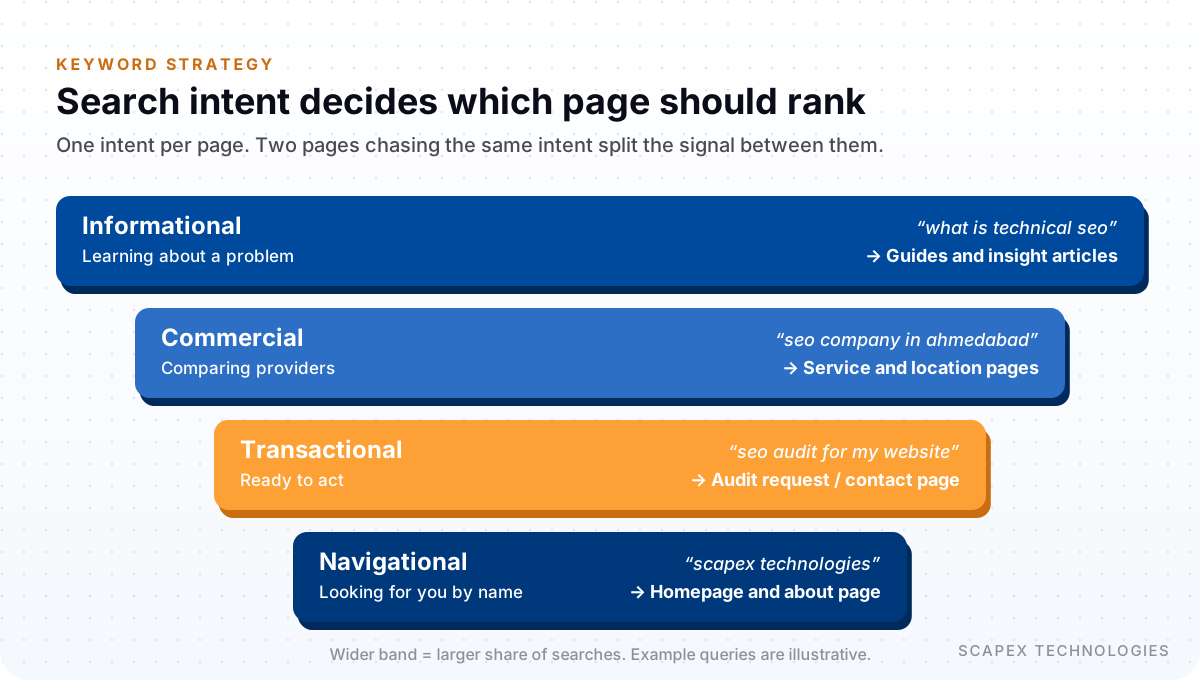
Semrush classifies the term as informational rather than commercial, which tells you the shape of the page that wins it. Someone typing “saas seo agency” is usually working out what one should do for them, not filling in a contact form. So the page has to teach — what product-led search actually looks like, how comparison and alternative pages are built, how sign-ups get attributed — and earn the enquiry at the end of that. A pricing table would rank for nothing.
Common questions
Is SEO worth it for a SaaS with low search volume?
Usually yes, because value per visit is what matters. Fifty searches a month from buyers actively comparing tools can outperform thousands of informational visits. The test is whether your buyers search at the decision point, not whether the volumes look impressive.
Should we target competitor brand names?
Comparison and alternative pages naming competitors are legitimate, widely used and effective, provided the comparison is accurate. Misrepresenting a competitor creates legal exposure and is trivially disproved by the buyer you are trying to win.
Start with the audit
Send a URL and get a written read of your technical health, your AI-answer visibility and the three things worth fixing first.
Related