
Scapex / Services / SEO services
SEO services
Technical SEO, content and authority building for Indian businesses. Keyword architecture first, then the pages that carry revenue. Free audit from Ahmedabad.

What you are buying
SEO is not a monthly allocation of blog posts. It is a sequence: find out what your buyers actually search, work out which pages should own which of those searches, make the site technically capable of ranking, publish the pages, and then earn the authority that lifts them. Run out of order it does not compound — content published before the architecture is settled ends up competing with itself, and links built before the content exists have nowhere useful to point.
Keyword architecture comes first
Before anything is written we build a mapped universe of target terms, clustered by intent and assigned to a specific page. For our own site that exercise produced 920 terms from 365 harvested competitor phrases. For yours the number will differ, but the discipline does not: no page gets written without a primary keyword, a defined intent and a place in the internal link structure.
This is also where most of the money is saved. A keyword map shows you quickly that some terms are unreachable for years, and that others with a tenth of the volume convert far better and can be won this quarter.
Technical foundations
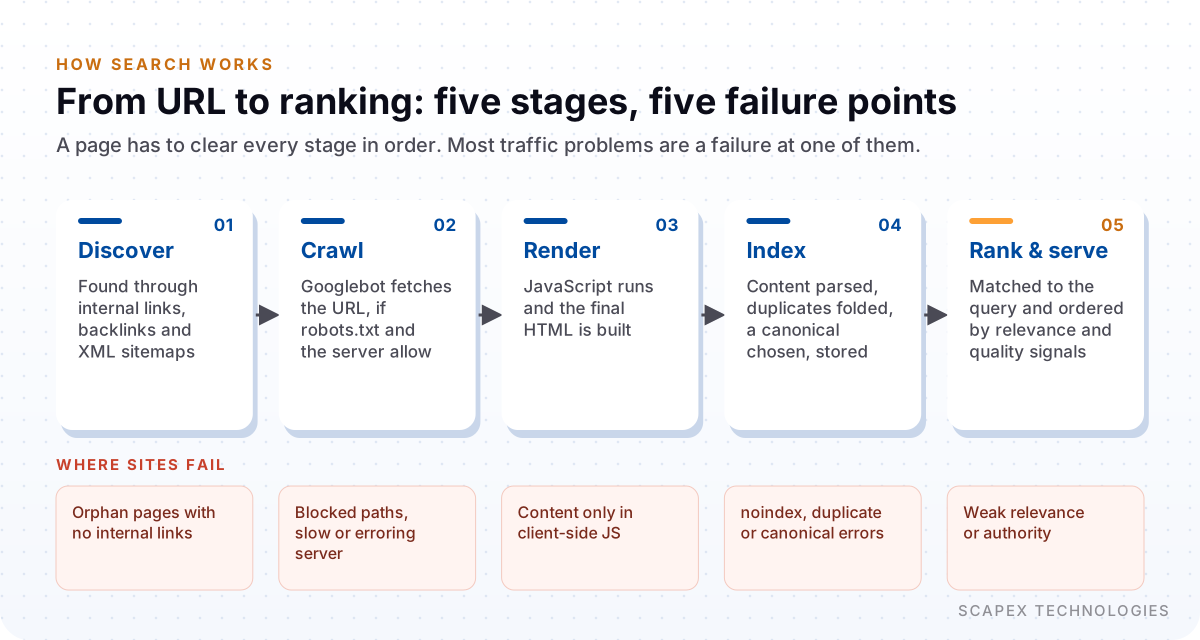
Crawl budget, rendering, indexation, Core Web Vitals, internal linking, schema and log-file analysis. Unglamorous work, and the reason everything after it compounds rather than plateaus. On most sites we inherit, a meaningful share of pages are either not indexed, indexed under the wrong canonical, or rendered in a way that hides the content from the crawler entirely.
Content built to the map
Briefs written from the keyword map and a subject-matter interview, produced by people who take the time to understand what your product actually does. For technical and industrial clients this matters more than anything else on this page — content that gets the engineering wrong is worse than no content, because the buyer who spots the error does not come back.
Authority
Earned coverage from original data and commentary, rather than bought placements that get disavowed in two years. Digital PR is the durable version of link building, and for most Indian B2B companies it is the least contested part of the whole discipline.
Reporting
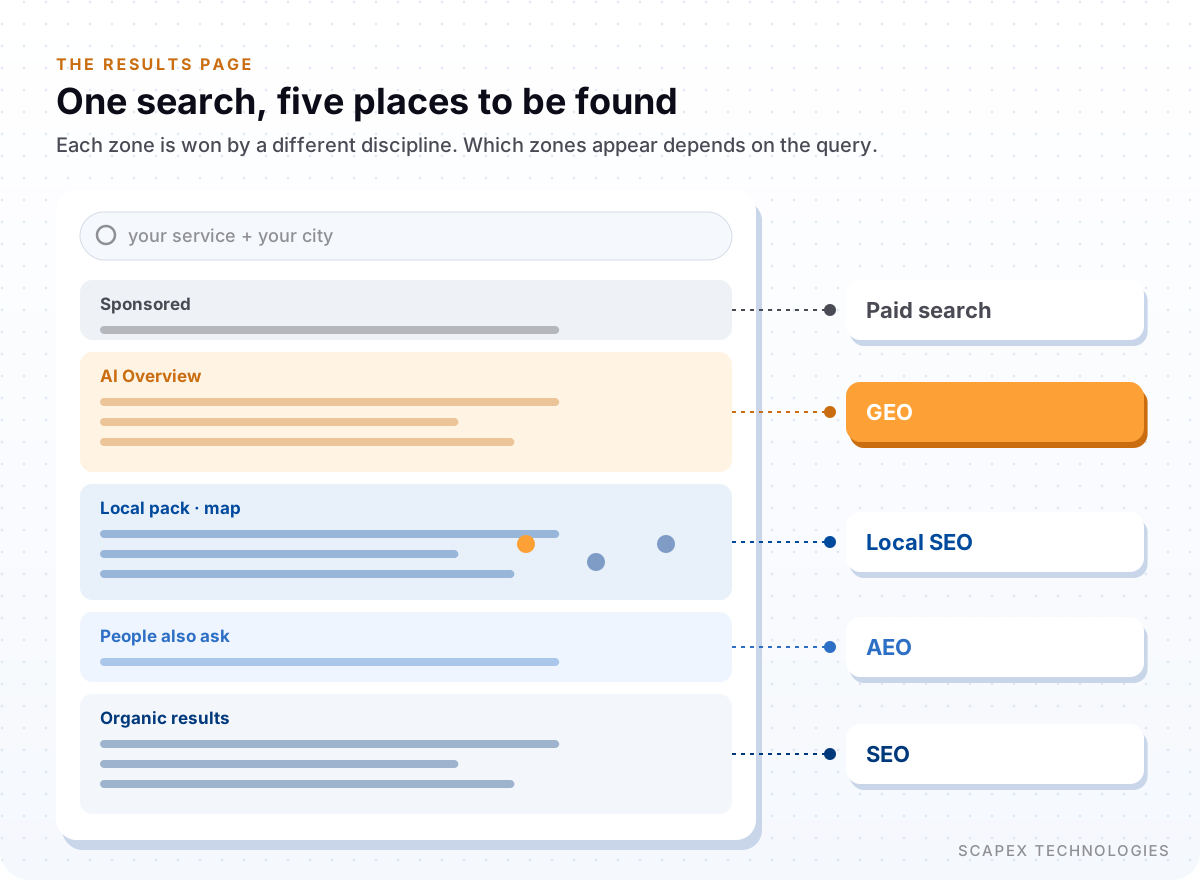
Monthly against pipeline and revenue, not rankings screenshots. We track AI-citation share alongside classic position data, because a query answered inside an AI response is a query that may never produce a click no matter where you rank.
On-page SEO: what changes on the page itself
On-page SEO is everything you control on the URL: the title tag and meta description, one clear H1 and a heading structure that follows the questions a buyer asks, body copy that matches the search intent, descriptive image file names and alt text, internal links with honest anchor text, and structured data that states the facts in machine-readable form.
It is the cheapest lever in search and the most often skipped, because it looks like housekeeping. It is also where AI answer engines lift their quotations from, so a page with a direct answer in its first sentence now earns twice.
Off-page SEO: authority earned somewhere else
Off-page SEO is the evidence other sites provide about you: editorial links, brand mentions in the press and trade media, reviews, and a consistent business listing everywhere your name appears. Search engines treat it as corroboration; AI assistants treat it as the sources they are willing to repeat.
We earn it through digital PR and editorial link building. We do not buy links, rent private blog networks or trade guest posts — the risk is real and the rankings they buy do not last.
SEO services for business, not for rankings
SEO services for a business should end in enquiries, not in a position report. That is why every engagement starts with the measurement chain — Search Console to GA4 to your lead records — so that each ranking gained can be traced to the leads it produced. If a keyword cannot be connected to revenue, it does not go on the plan.
Common questions
How is an SEO engagement scoped?
Scope follows the site, not a package. A five-page local business site and a 40,000-URL ecommerce catalogue are not the same problem, so we start with an audit and a keyword map, then agree a defined set of deliverables against them. Be cautious of any arrangement that has no defined deliverable — it usually resolves into a small number of low-quality articles.
Is SEO still worth it now that AI answers questions directly?
Yes, but the target has widened. AI assistants are trained and grounded on indexed web content, so the same work that makes a page rank also makes it available to be cited. What changes is that some informational queries now resolve without a click, which shifts the value toward commercial and transactional terms, and toward being named inside the answer itself. Measuring only sessions will make SEO look weaker than it is.
What is the difference between on-page and off-page SEO?
On-page SEO covers everything you control on your own site: content, titles, internal links, structure and technical health. Off-page SEO covers signals that come from elsewhere, mainly links and mentions from other sites. On-page work is faster and more predictable; off-page work is slower and harder but is usually what separates two sites that have both done the on-page work properly.
Do I need an SEO audit before starting?
In almost every case, yes. Without one you are guessing at which constraint is actually binding. We have seen sites where the entire problem was a single misconfigured directive blocking half the catalogue from being indexed — twelve months of content spend would not have fixed it, and one afternoon did.
Start with the audit
Send a URL and get a written read of your technical health, your AI-answer visibility and the three things worth fixing first.
Related