
Scapex / Services / Generative engine optimisation
Generative engine optimisation
A generative engine optimization agency that gets your business named inside AI answers — entity signals, structured facts and citable sources. Free AI visibility audit.

The problem GEO solves
When someone asks an assistant to recommend a supplier, compare two products or explain a process in your category, it produces an answer. Your business is either named in that answer or it is not. There is no second page to be on.
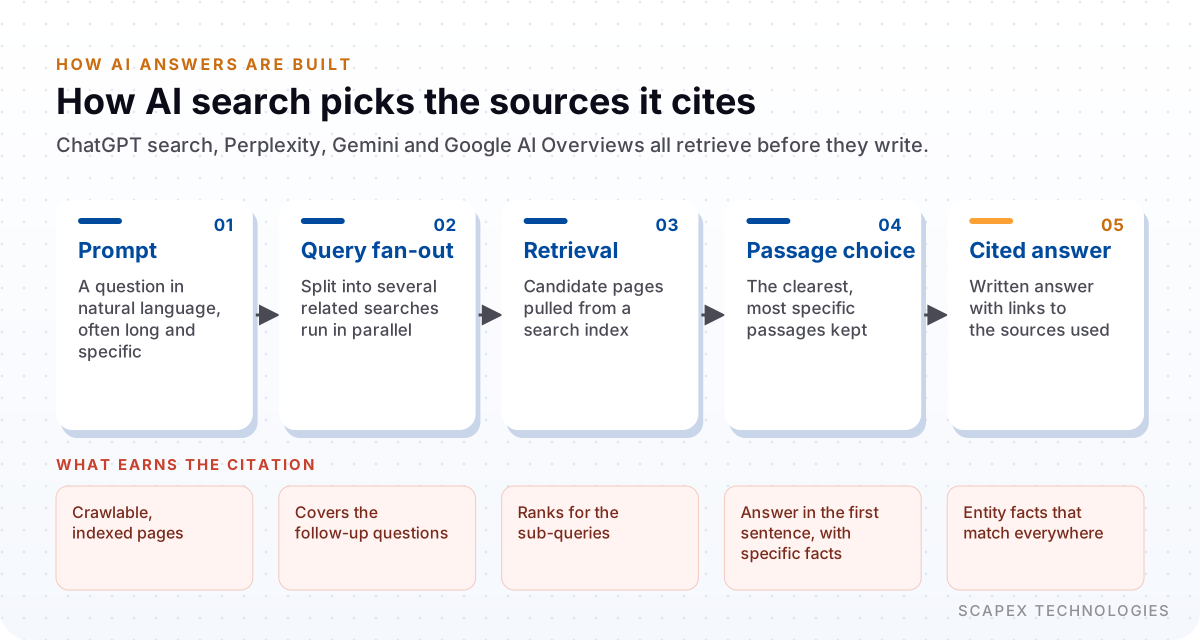
This is a different game from ranking. An assistant is not choosing a link, it is assembling a claim it is willing to stand behind. It reaches for sources that are unambiguous about who they are, specific about facts, and structured in a way that makes a sentence safe to quote.
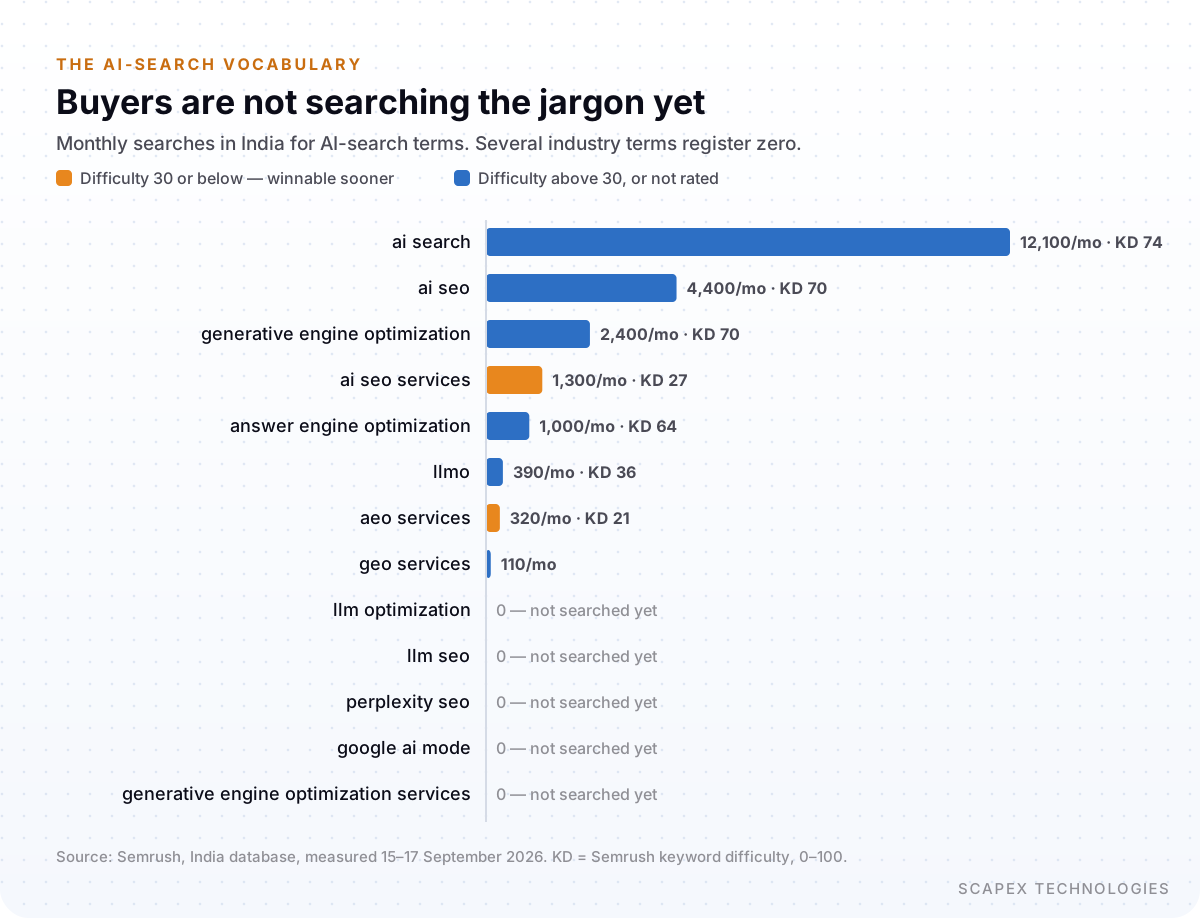
Show the data as a table
| Keyword | Searches / month | Difficulty |
|---|---|---|
| ai search | 12,100 | 74 |
| ai seo | 4,400 | 70 |
| generative engine optimization | 2,400 | 70 |
| ai seo services | 1,300 | 27 |
| answer engine optimization | 1,000 | 64 |
| llmo | 390 | 36 |
| aeo services | 320 | 21 |
| geo services | 110 | |
| llm optimization | 0 | |
| llm seo | 0 | |
| perplexity seo | 0 | |
| google ai mode | 0 | |
| generative engine optimization services | 0 |
What we actually change
Entity clarity first. Your business needs to be a consistent, resolvable entity across your own site, your structured data, and the third-party sources that describe you. Conflicting names, addresses, descriptions and categories are the single most common reason a company is skipped.
Then the facts themselves. Specifications, prices, capacities, certifications, service areas, dates — stated plainly, in text, attributed, and marked up. Assistants are heavily biased toward content that states something concrete and verifiable over content that describes a company in adjectives.
Then citable structure. Self-contained passages that answer a specific question completely, so a model can lift one without needing the surrounding page for context. This is the part most content teams get wrong, because it runs against how marketing copy is usually written.
Measurement
We track which prompts in your category produce answers naming you, which name competitors, and which cite a third-party source you could be present in instead. That last category is usually the fastest route to improvement — being added to a listicle an assistant already trusts often moves faster than making your own site the source.
An honest note on the demand
'Generative engine optimization' draws around 2,400 searches a month in India at a keyword difficulty of 70, and 'AI SEO' 4,400 at difficulty 70. Terms like 'AI visibility' and 'ChatGPT SEO' return no measurable volume in the India database at all yet. The search demand for the service name is still small, and we would rather tell you that than quote you a growth figure we cannot support. The reason to do this work is not that people are searching for the service — it is that your buyers are already using the assistants.
Common questions
What is generative engine optimization?
Generative engine optimisation is the practice of making a business more likely to be named and cited inside answers produced by AI assistants such as ChatGPT, Google's AI Overviews, Perplexity, Gemini and Copilot. It works on entity clarity, structured and verifiable facts, and passage-level content structure, rather than on the ranking signals that drive a traditional results page.
Is GEO different from SEO?
They overlap but they are not the same. SEO competes for a position in a ranked list; GEO competes for inclusion in a synthesised answer. A site can rank first and never be cited, usually because its content is well-written marketing prose with no quotable factual claims. Conversely a modest site with clear, specific, well-structured facts can be cited regularly. The technical foundations serve both, which is why we do not sell them separately.
How do you measure whether GEO is working?
By running a fixed set of prompts that represent how buyers in your category actually ask, at intervals, across the major assistants — and recording whether you are named, which competitors are named, and which sources are cited. It is a share-of-voice measure rather than a ranking, and it is noisier than position tracking, so it is read as a trend over months rather than week to week.
Can you guarantee my business appears in ChatGPT?
No, and nobody honestly can. Assistants do not expose a ranking system, their outputs vary between sessions, and their grounding sources change without notice. What can be done is to remove the specific reasons a model skips a business and to increase the number of trusted places where your facts appear. That reliably shifts the odds. It does not produce a guarantee.
Start with the audit
Send a URL and get a written read of your technical health, your AI-answer visibility and the three things worth fixing first.
Related