
GEO vs AEO vs SEO: what the three actually mean
Three acronyms, three different jobs. What GEO, AEO and SEO each optimise for, where they overlap, and which one your business actually needs first.

Why the confusion exists
Two of these three acronyms were invented by agencies, and they were invented quickly. When we reviewed the fifty most-cited SEO companies in the world in September 2026, forty of them sold a named AI-search service — but they called it at least six different things between them: GEO, AEO, AI Visibility, AI Search Optimisation, AIO and AI SEO. Some sold two of those as separate line items.
That is not a sign of a mature discipline. It is a sign of a land grab. The underlying work is real, but the vocabulary is still being fought over, and you should read any agency's definitions as a positioning choice rather than an industry standard.
The three jobs, stated plainly
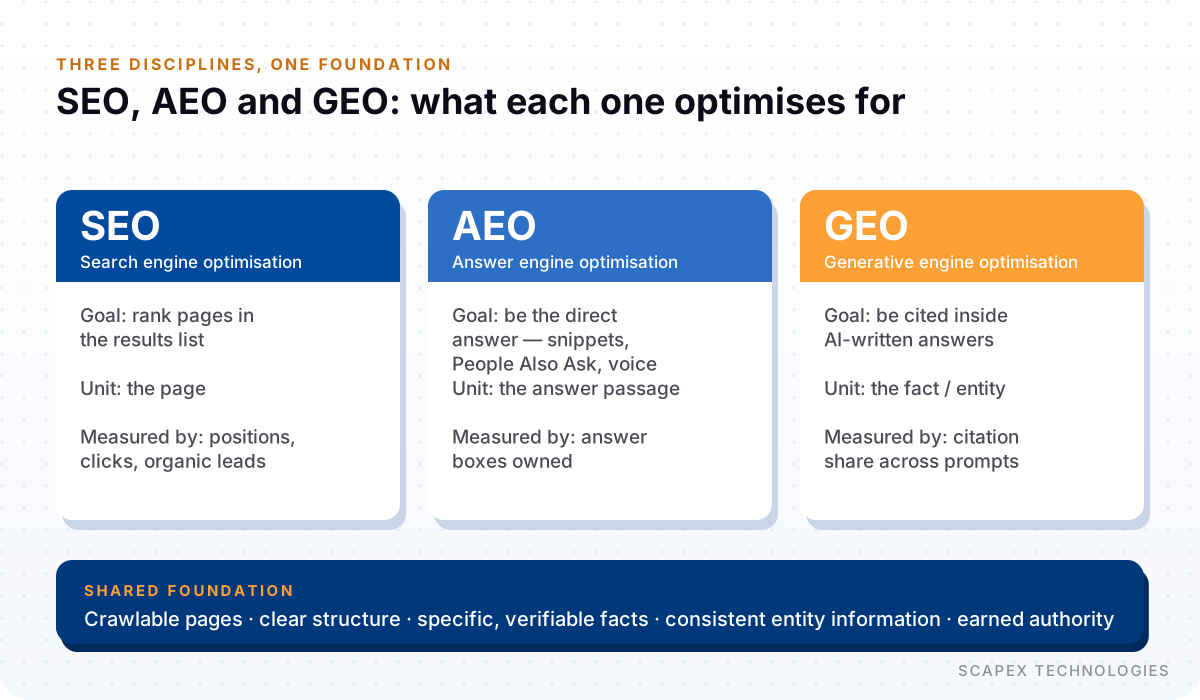
SEO — search engine optimisation — competes for a position in a ranked list of links. The unit of success is a position for a query. The mechanics are relevance, authority and technical crawlability.
AEO — answer engine optimisation — competes to be the direct answer on the results page itself: the featured snippet, the People Also Ask expansion, the voice result. The unit of success is owning the answer box. The mechanics are question research, answer-first structure and schema.
GEO — generative engine optimisation — competes to be named and cited inside a synthesised answer produced by an assistant such as ChatGPT, Perplexity, Gemini or Copilot. The unit of success is being mentioned in the response. The mechanics are entity clarity, verifiable structured facts and passage-level quotability.
Where they genuinely overlap
All three sit on the same technical foundation. A site that cannot be crawled, rendered or indexed fails at all three simultaneously, which is why we do not sell the foundations separately.
AEO and GEO overlap heavily on content structure. Both reward a self-contained passage that answers one question completely and early. Work done for one usually benefits the other.
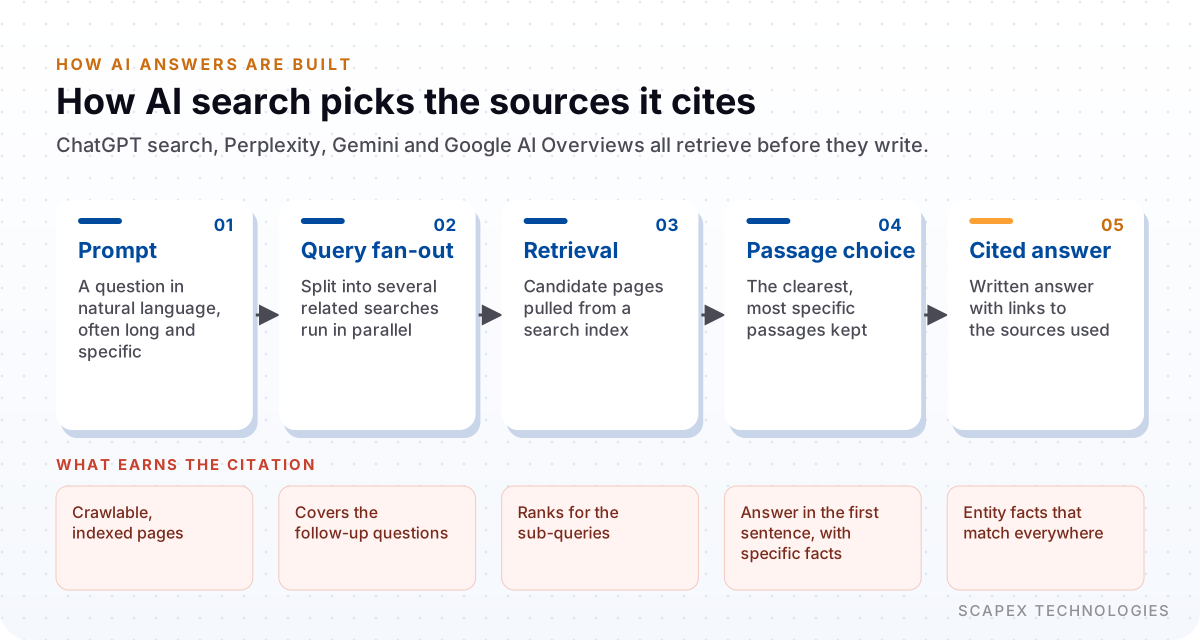
SEO and GEO overlap on the index. Assistants ground their answers in indexed content, so ranking ability and citation ability are correlated — but they are not the same thing.
Where they genuinely differ
A site can rank first and never be cited. This is common, and the usual cause is that the page is well-written marketing prose containing no quotable factual claim. A model looking for something to assert finds nothing it can stand behind.
Conversely a modest site can be cited repeatedly if its facts are specific, clearly attributed and unambiguously about a clearly identified entity. We have seen small manufacturer sites cited on specification queries where far larger competitors are not, purely because the small site published the numbers and the large one published a brochure.
AEO differs from both in being far more mechanical and measurable. The formats are known, the triggers are researchable, and wins show up in ordinary position tracking. If you want something with a visible feedback loop, start there.
Which one you need first
Almost always SEO, because it is the foundation the other two stand on, and because for most Indian businesses there is still a large amount of uncontested ranking opportunity that has nothing to do with AI.
Start with AEO instead if you already rank well on informational queries and are watching competitors take the answer box above you. The work is a content restructure rather than a new programme.
Prioritise GEO earlier than normal if your buyers are technical and research-heavy, if your category is one where people ask assistants for recommendations, or if you are new enough that you have no ranking authority to defend and may as well build for the newer surface from the start.
Be suspicious of anyone selling all three as separate retainers. In practice the same audit, the same keyword architecture and the same technical work serve all three, and the incremental effort for GEO and AEO on top of a properly run SEO programme is real but not threefold.
Common questions
Is GEO just a rebranding of SEO?
Partly, and it is fair to be sceptical. Much of what is sold as GEO is standard technical SEO and content structure with a new label. The genuinely distinct parts are entity disambiguation, designing content to be quotable in isolation, and building presence in the third-party sources assistants cite. Those are real additions, but they are additions to SEO rather than a replacement for it.
Which acronym will survive?
Unknown, and it does not matter much. The vocabulary is unsettled — the same service is currently sold under at least six names. Judge an agency on whether it can explain the mechanism it is changing and how it will measure the result, not on which three letters it prints on the page.
Do I need to pay for all three?
No. The foundations are shared, so a well-run SEO engagement should already include the technical and structural work that most of GEO and AEO depend on. What can justify separate scope is ongoing AI-citation monitoring and third-party source placement, which are genuinely extra effort.
Want this applied to your site?
Send a URL and get a written read of your technical health, your AI-answer visibility and the three things worth fixing first.
Related services
More insights